Are We Really Eating Unhealthy - Or Have We Forgotten Balance?
We often believe healthy eating belongs to other countries or modern trends. But the truth is, balance was always part of our own food culture. From idli and dosa to kanji, sambar, poriyal, and curd - our traditional meals were designed with rhythm, portion, and timing in mind. A balanced diet isn’t about eating less or eating fancy. It’s about eating right, at the right time, in the right quantity. Somewhere between modern life and convenience, we forgot this simple wisdom. Sometimes, good health doesn’t require something new - it just asks us to remember what we already knew.
By Uma | Updated on December 29, 2025
0 Reviews
We often hear this question:
“Why don’t we feel healthy even though we eat home food?”
Most of us grew up on rice, dosa, idli, poriyal, sambar, kanji, palaya saadham. On paper, that sounds like a perfect diet. So then why does it sometimes feel like we’re still missing nutrition? Why do we look at countries like Japan or Italy and think they eat better than us?
Here’s a simple truth: they eat rice too. Just like us.
And even within India, look at villages where fast food hasn’t fully entered yet. People live active, healthy, and content lives. It’s not magic. It’s not expensive food. It’s something much simpler - a balanced diet.
What We Missed Along the Way
Our traditional food system was never the problem.
The problem is that we slowly stopped following how we were meant to eat it.
There’s a beautiful Tamil proverb many of us have heard:
“Kaalaiyil raja va pola saapidu
Maalaiyil mandhri ah pola saapidu
Iravil pitchaikaaranai pola saapidu.”
Which roughly means:
Eat like a king in the morning.
Eat like a minister in the afternoon.
Eat like a beggar at night.
In simple terms - eat well in the morning, eat moderately at lunch, and eat lightly at night. Not because food is bad, but because your body doesn’t need heavy fuel when it’s preparing to rest.
Our Traditional Diet Was Already Balanced
Think about it.
Breakfast was idli or dosa - fermented, easy to digest.
Idli was steamed. Dosa was light. Always paired with chutney or sambar - vegetables, lentils, probiotics.
Some homes had palaya kanji or kali - full of fibre and protein. Simple, filling, and nourishing.
Lunch was a proper meal or thaali.
Rice, but in a sensible quantity.
Sambar filled with vegetables and dal.
Poriyal, kootu, rasam.
And finally, curd — cooling, calming, gut-friendly.
Dinner was the lightest.
Arisi kanji.
Millet upma.
A simple soup.
Sometimes just enough protein, nothing extra.
This wasn’t accidental. It was wisdom built into daily life.
So What Changed?
Modernisation happened. City life happened. Convenience happened.
Meals became heavy.
Portions increased.
Vegetables reduced.
Timing got confused.
We started eating rich dinners and rushed breakfasts.
We replaced balanced meals with excess non-veg or processed food — not because non-veg is bad, but because balance disappeared.
Ironically, countries like Japan, Italy, and Blue Zone regions stayed closer to their food culture. They didn’t abandon it - they adapted without losing the good parts.
And now we look up to them.
The Irony
We often think every other country, city, or culture is superior to ours. But in many ways, we already had what we’re searching for - we just stopped noticing it.
The culture can change.
Lifestyle can evolve.
But the good parts don’t need to be replaced.
Coming Back to Balance
A balanced lifestyle doesn’t require fancy superfoods.
It asks for awareness.
Eat more vegetables.
Reduce portions, especially at night.
Respect meal timing.
Eat a little of everything - not a lot of one thing.
Our food was never the enemy.
Forgetting balance was.
Sometimes, moving forward simply means remembering what we already knew.
It asks for awareness.
Reduce portions, especially at night.
Respect meal timing.
Eat a little of everything - not a lot of one thing.
Forgetting balance was.

You will also love
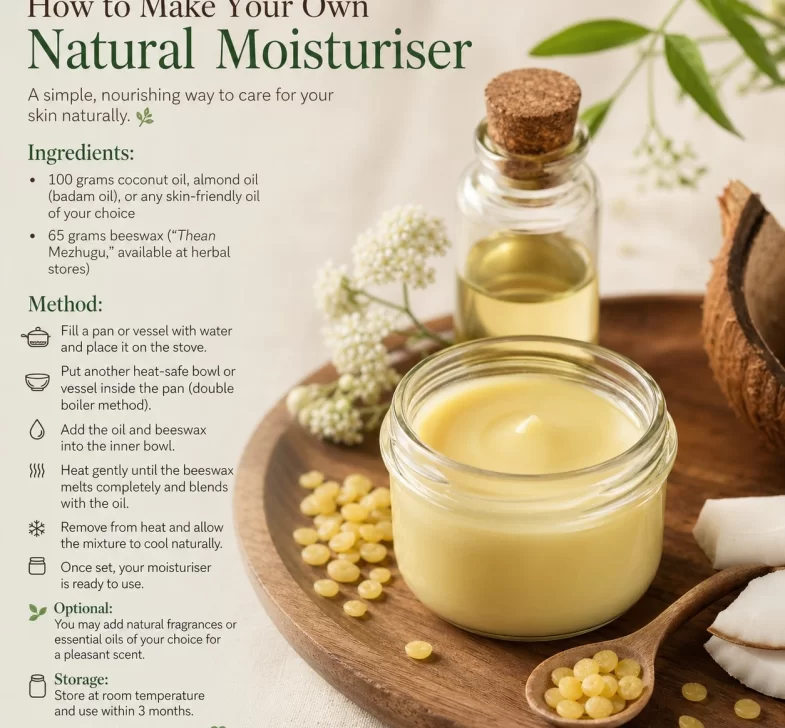
🌿 How to Make Your Own Natural Moisturiser
Create a simple homemade moisturiser for...
0 Ratings
Create a simple homemade moisturiser for...
0 Ratings